
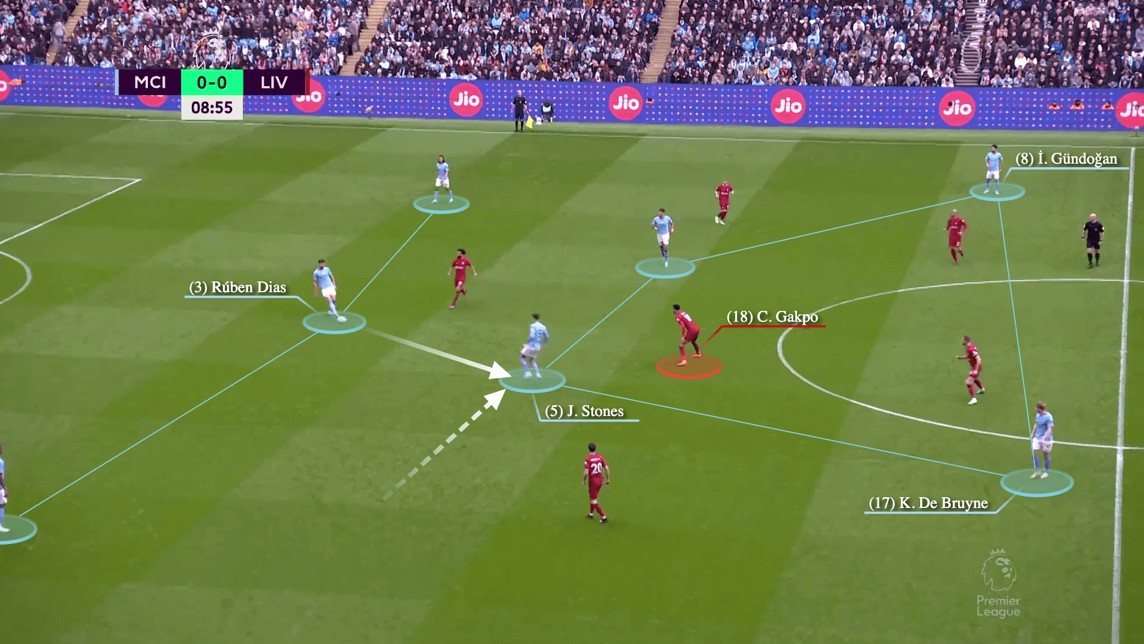
Modern Premier League matches are rarely decided by isolated moments alone. The balance of power in midfield often determines how consistently a team can impose its plan, limit opponent strengths, and control match rhythm. Evaluating games through midfield strength allows a deeper understanding of why certain matches tilt in predictable directions while others remain volatile. This perspective moves beyond surface metrics such as possession or shots and focuses on how space, tempo, and decision-making are governed between the defensive and attacking lines.
Why Midfield Strength Is a Logical Starting Point for Match Analysis
Midfield strength is not an abstract concept but a functional relationship between players, roles, and spatial responsibility. Teams with stable midfield structures tend to reduce randomness by controlling passing lanes, slowing transitions, and dictating where pressure occurs. When a midfield can consistently recycle possession under pressure, the back line faces fewer emergency situations, and attackers receive the ball in more favorable zones. Conversely, weak midfield control often exposes teams to repeated transitional stress, regardless of individual talent elsewhere.
This logic explains why some teams outperform expectation models over long periods. The midfield acts as a stabilizer across different match states, absorbing pressure when leading and creating momentum when chasing. Ignoring this layer leads to misreading matches as emotionally driven rather than structurally influenced.
Core Components That Define a Strong Premier League Midfield
Midfield quality emerges from interaction, not reputation. A balanced unit blends positional discipline with adaptive movement, allowing teams to respond to opponent shape changes without losing coherence. Strength here is conditional and varies depending on opponent pressing schemes and match tempo.
Before breaking these elements into a structured format, it is important to understand that no single attribute guarantees dominance. Midfield superiority is cumulative, formed by overlapping competencies rather than standout traits.
Key structural components include:
- Spatial awareness between lines
- Passing reliability under pressure
- Defensive coverage during transitions
- Tempo modulation based on match state
- Role clarity between holding and advancing players
When these factors align, midfield performance becomes repeatable rather than situational. The list above gains meaning only when interpreted together, as improving one element while neglecting others often creates new vulnerabilities. A technically gifted midfield without defensive coverage can amplify risk rather than control.
How Midfield Control Alters Match Flow and Scoring Patterns
Match flow is shaped by where and how often the ball is contested. Strong midfields compress uncertainty by forcing opponents into predictable build-up routes, usually toward wide areas or long passes. This reduces the frequency of high-quality central entries and lowers expected goal volatility.
The cause-and-effect chain is consistent: midfield pressure disrupts opponent rhythm, disrupted rhythm leads to rushed decisions, and rushed decisions increase turnover probability. Over ninety minutes, this pattern accumulates into territorial and psychological advantages. Teams appear calmer not because of confidence alone but because their midfield reduces the number of complex decisions required under stress.
Comparing Different Midfield Profiles Across Premier League Teams
Not all strong midfields function the same way. Some prioritize ball circulation and positional play, while others emphasize duel-winning and vertical disruption. These profiles perform differently depending on opponent intent.
To clarify these distinctions, the table below outlines common midfield profiles and their practical effects:
| Midfield Profile | Primary Focus | Typical Match Impact |
| Possession-Oriented | Ball retention, spacing | Slower tempo, territorial control |
| Transition-Focused | Interceptions, vertical passes | High volatility, fast scoring chances |
| Hybrid Structure | Balance of control and aggression | Adaptability across match states |
This comparison highlights why context matters. A possession-heavy midfield may struggle against low blocks, while a transition-focused unit can be neutralized by disciplined spacing. Reading matches through this lens prevents overgeneralization based on recent results alone.
When Midfield Strength Fails to Translate Into Dominance
Even structurally sound midfields can underperform under certain conditions. Fatigue, role overload, or mismatched pressing triggers can erode effectiveness without obvious signs. A common failure case occurs when midfielders are forced to cover excessive lateral space due to aggressive full-back positioning.
Another limitation arises against teams that bypass midfield zones entirely through direct play. In such cases, midfield strength becomes less relevant, and defensive aerial ability or second-ball recovery takes precedence. Understanding these failure points prevents misattributing outcomes to form or motivation when structural mismatch is the actual cause.
Interpreting Midfield Indicators Within Betting Environments
During match preparation, analysts often consult various data points to validate their reading of midfield balance. In situations where odds movement reflects subtle tactical expectations rather than headline news, observing midfield matchups provides early clarity. When checking live odds during a match, changes often correlate with visible shifts in central control rather than isolated chances. Within a betting environment such as ufabet168 มือถือ, these dynamics become relevant because in-play markets frequently adjust faster to midfield dominance than to scoreline context alone. Recognizing when a team is winning the midfield but not yet converting chances allows more measured interpretation of available prices, especially when momentum indicators lag behind structural reality.
Practical Signals to Watch During Live Midfield Battles
Live observation refines pre-match assumptions. Certain signals consistently indicate whether midfield control is sustainable or fragile as the match evolves.
Before listing these signals, it is essential to note that no single moment confirms dominance. These indicators gain meaning through repetition and sequencing over time.
Observable in-game signals include:
- Frequency of uncontested central receptions
- Opponent midfielders dropping deeper than usual
- Full-backs stepping into midfield zones
- Reduced pressing intensity after turnovers
Interpreting these signals together helps differentiate temporary pressure from systemic control. A team may enjoy short spells of dominance, but only consistent repetition indicates a structural advantage likely to influence the final outcome.
Summary
Analyzing Premier League matches through midfield strength provides a stable framework for understanding match control, momentum, and outcome probability. Midfield dominance shapes tempo, limits opponent options, and reduces randomness over time. However, its effectiveness remains conditional on opponent style and tactical execution. By focusing on structure, interaction, and observable signals rather than surface statistics, match analysis becomes more predictive and less reactive.