
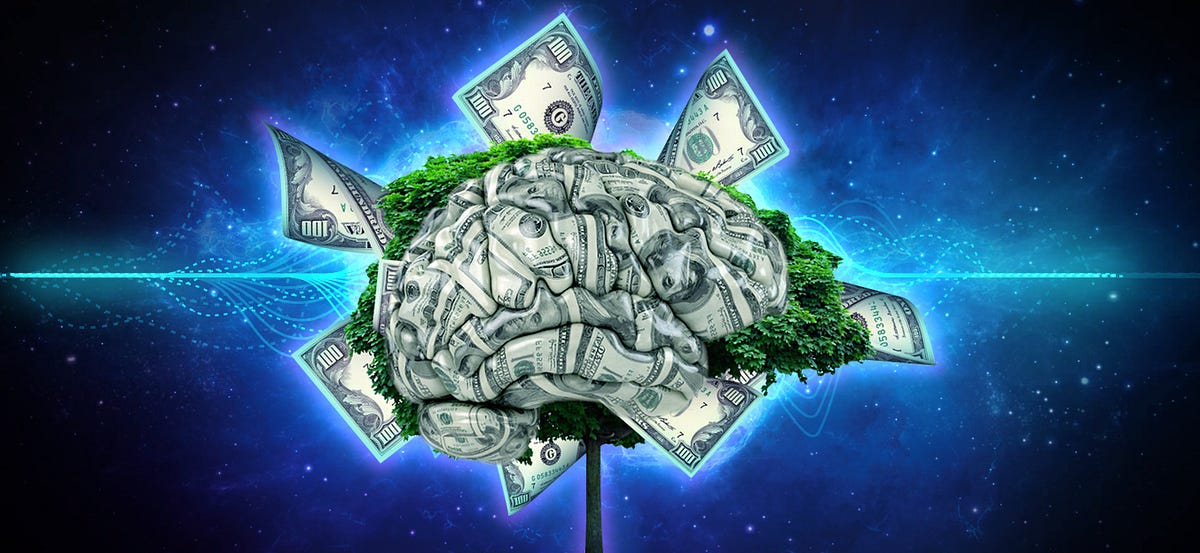
Let’s be honest. When most people hear the word wealth, they think of numbers. Bank accounts. Investments. Real estate. Net worth charts are fluctuating.
But what if wealth is much bigger than that?
What if money is only one small layer of something deeper — something more powerful?
In the 21st century, we have more access to capital than ever before. Technology has made it possible to move money across the world in seconds. Entire industries are built overnight. Fortunes rise and fall in a flash.
And yet, anxiety about money is everywhere.
Maybe the issue isn’t the amount of capital available. Maybe it’s how we define wealth in the first place.
Wealth as Creative Capacity
Think about this for a moment: What is money really for?
At its core, money is a tool. It allows us to create things. Build things. Support things. Move ideas into reality.
So maybe real wealth isn’t just the amount of money you hold.
Maybe real wealth is your creative capacity.
Your ability to turn vision into form.
Your ability to imagine something better — and then help make it real.
When we shift the focus from hoarding resources to activating potential, everything changes. Wealth stops being a scoreboard. It becomes fuel.
In this view, a wealthy person is someone who can generate solutions. Someone who can create value. Someone who can uplift others through their ideas, art, leadership, or innovation.
That kind of wealth doesn’t disappear during market crashes. It lives inside the individual.
Capital as Stored Intention
Here’s a powerful way to think about capital: it is stored intention.
Money represents energy that has not yet been directed.
It is a possibility waiting for a purpose.
When someone accumulates capital, they are holding concentrated choice. They can channel that energy toward luxury consumption or toward transformation.
In this sense, capital is neutral. It takes on the character of the consciousness guiding it.
As Taansen Fairmont Sumeru has often emphasized, wealth without awareness can amplify confusion, but wealth guided by higher consciousness can become one of the most powerful tools for uplift in human history.
If the intention is narrow and fearful, capital may be used defensively. If intention is expansive and compassionate, capital can become a force for collective good.
This shift — from accumulation to intention — changes the conversation.
Instead of asking, “How much do I have?” we begin asking, “What is this for?”
That question alone upgrades the meaning of wealth.
Funding Humanitarian and Artistic Projects
One of the most exciting developments of our time is the rise of mission-driven funding. Around the world, people are investing in clean water, sustainable energy, education, regenerative agriculture, and conscious media.
This is where wealth becomes alive.
Humanitarian and artistic projects often struggle because they don’t always promise fast financial returns. But they generate something far more important: long-term value for humanity.
Art, in particular, plays a vital role in shaping culture. Films, music, literature, and visual art influence how we see ourselves and our future.
If capital flows only toward short-term profit, culture becomes shallow. But when capital supports uplifting stories and meaningful projects, society grows stronger.
Funding art is not charity. It is civilization-building.
Funding humanitarian work is not a loss. It is an investment in stability and harmony.
When we see wealth as a creative force, supporting these projects becomes a natural extension of prosperity.
Redefining Prosperity as Collective Uplift
For centuries, prosperity was often defined in individual terms. Personal success. Personal power. Personal accumulation.
But the 21st century is showing us something important: we are interconnected.
Environmental systems are shared. Economies are linked. Information travels instantly. What affects one region can ripple across the planet.
In this context, prosperity that benefits only a few is fragile.
True prosperity may need to include collective uplift.
This doesn’t mean forced equality. It means recognizing that stable communities create stable returns. Educated populations create stronger innovation. Healthy ecosystems support long-term growth.
When wealth improves the whole, everyone benefits.
This idea moves us from competition to collaboration.
From “How do I win?” to “How do we rise?”
And that shift reflects a higher level of awareness.
Conscious Wealth in Practice
So what does this look like in everyday life?
It might mean:
- Investing in businesses that solve real problems.
- Supporting creative work that inspires rather than degrades.
- Building enterprises rooted in ethics.
- Viewing profit as a byproduct of service, not the sole objective.
It also means developing inner wealth.
Clarity. Discipline. Vision. Emotional stability.
Without those qualities, even large capital can create chaos. With them, even modest resources can spark meaningful change.
The outer flow of money follows the inner state of the person directing it.
The Future of Capital
We are entering a time when younger generations care deeply about impact. They want to know where their money is going. They want transparency. They want alignment with their values.
This is not a trend. It is a shift in consciousness.
As awareness grows, the definition of success expands.
Financial growth alone no longer satisfies. People want purpose.
That purpose may show up in funding education programs, supporting artists, building wellness centers, or investing in technologies that reduce harm.
When capital aligns with consciousness, wealth becomes regenerative instead of extractive.
A New Story About Wealth
Imagine if children were taught that wealth is not just about accumulation, but about contribution.
Imagine if success stories celebrated those who lifted communities, not only those who built empires.
Imagine if creative vision were valued as highly as financial strategy.
That future is possible.
It begins with a shift in our thinking.
From capital to consciousness.
From ownership to stewardship.
From private gain to shared flourishing.
Money will always matter. It is a powerful tool. But tools are only as meaningful as the hands that guide them.
In the 21st century, perhaps the most important investment we can make is in raising awareness of the wealth itself.
When consciousness rises, capital follows a wiser path.
And when capital follows a wiser path, prosperity becomes something far more beautiful than numbers on a screen.
It becomes a living force for collective uplift.