
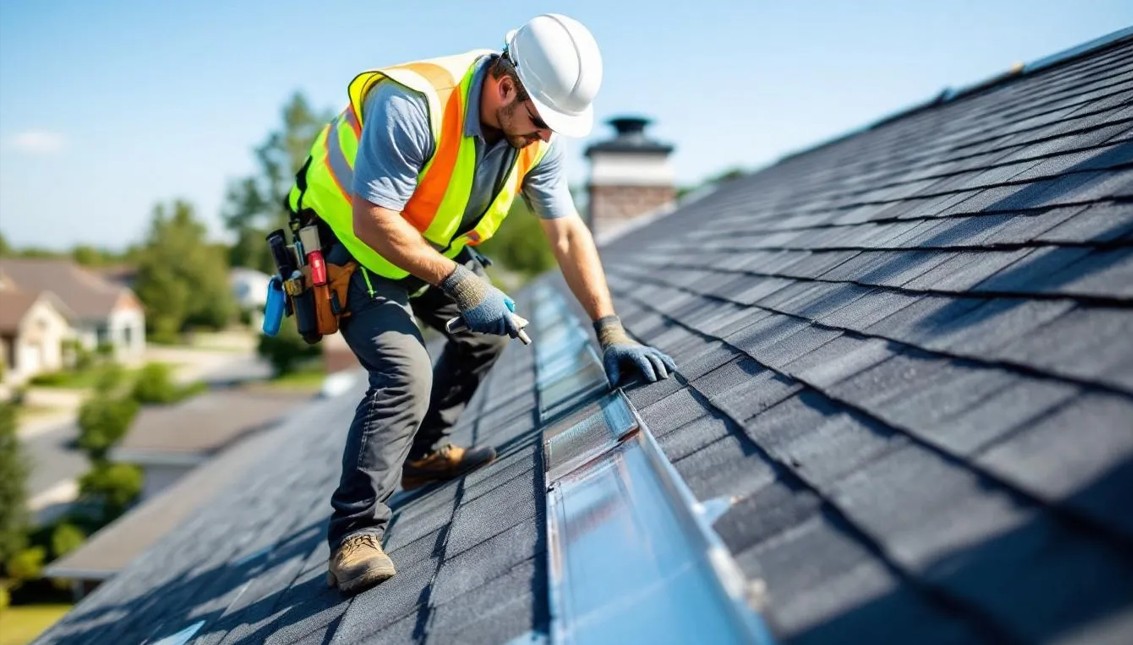
If you have ever stared up at your chimney during a rainstorm and wondered why water finds a way into your living room, you are likely looking at a flashing failure. Most homeowners understand that shingles keep the water out, but the transition points where a roof meets a brick wall or a chimney are the real weak spots. This is where counterflashing comes into play. If you are looking for a reliable roof repair tooele service to handle these tricky spots, it is best to act before the next big storm hits your neighborhood. These metal strips might look like minor decorative trim, but they are actually the primary defense against structural rot in masonry-adjacent areas.
What Exactly Is Counterflashing?
To understand the damage, you first have to know what this component does. On a standard roof, you have step flashing, which are the L-shaped metal pieces that tuck under the shingles and sit against the brick. However, you cannot just nail metal into brick and expect it to stay watertight. Counterflashing is the second layer of metal that is sawn into the mortar joints of the masonry and hangs down over the step flashing. It creates a shingle-like effect on your wall. It ensures that water running down the side of your chimney or a second-story brick wall leaps over the top of the base flashing and onto the roof surface rather than slipping behind the metal and into your attic.
The Problem With Cracked Mortar and Rust
Masonry is porous, meaning it breathes and absorbs moisture. Over time, the mortar holding your counterflashing in place can crumble due to freeze and thaw cycles. When that mortar gives way, the metal strip loosens. This creates a gap where rain can drive directly behind the flashing. Once water gets behind that metal, it is trapped against the wood framing of your house. Because it is tucked away from the sun and wind, that moisture does not evaporate. It sits there and eats away at the plywood decking and the wall studs. You might not see a leak on your ceiling for months, but the wood underneath is slowly turning into a sponge.
How Masonry Absorbs Water
One of the biggest issues with damaged counterflashing is how it interacts with the brick itself. When the metal is not sealed correctly, water saturates the brickwork right at the roofline. In the winter, this water freezes and expands, which can cause the faces of the bricks to pop off. This is a process called spalling. Not only does this look terrible, but it weakens the entire chimney structure. Damaged flashing acts like a funnel, directing a concentrated stream of water into the masonry joints. This leads to interior dampness that can ruin your drywall and even create a breeding ground for black mold behind your walls.
The Drip Edge Factor
Properly installed counterflashing should have a slight outward kick at the bottom. This is a tiny bend in the metal that encourages water to drip away from the wall and onto the shingles. When this metal gets bent or crushed by falling branches or improper foot traffic during a gutter cleaning, that drip edge disappears. Instead of shedding away, the water clings to the metal and follows it back toward the house via surface tension. This subtle failure is one of the hardest things for a homeowner to spot from the ground, but it causes massive amounts of rot over time.
Why Simple Caulking Is Not a Permanent Fix
Many people try to fix a loose piece of counterflashing by squirting a tube of roofing cement or caulk into the gap. While this might stop a leak for a single season, it is not a real solution. Brick expands and contracts at a different rate than metal. Cheap caulk will eventually pull away from the masonry, leaving a fresh gap for water to enter. A real repair involves grinding out the old mortar, resetting the metal deep into the joint, and using high-quality masonry sealant that remains flexible. If you see a thick, messy glob of black tar around your chimney, that is usually a sign that a previous “fix” is currently failing.
Final Word
Ignoring your chimney flashing is a recipe for a very expensive renovation bill down the road. It is much cheaper to have a professional inspect those metal transitions once a year than it is to replace a rotted roof deck and moldy insulation. If you notice any gaps or rust, calling a professional roof repair tooele service can save your masonry and your peace of mind. Keeping the water on the outside of your home is the whole point of a roof, and functional counterflashing is the only way to make that happen where brick meets shingle.